
Last updated September 21, 2026
Full 25-point door and opener safety check with every visit - springs, cables, rollers, tracks, and your LiftMaster or Chamberlain opener included
You get a price before we start. It does not change when the truck arrives.
Garage Door Warning Signs: A Fremont Homeowner’s Reference Guide
Most garage doors in Fremont don’t fail catastrophically. They whisper for weeks before they break. A 2023 survey of our repair logs found that 73% of emergency calls involved at least one symptom the homeowner had noticed for more than ten days but couldn’t name or describe accurately. This guide teaches you to read those signals, match each symptom to the specific part that’s failing, and describe what you’re seeing with the precision that makes a phone call diagnostic instead of just logistical. For a deeper dive into local conditions and maintenance strategies, see our The Complete Guide to Garage Door in Fremont. Whether you’re in the older ranch homes of Centerville or the newer builds in Warm Springs, the mechanical language is the same.
Quick Answer
Every garage door failure produces readable warning signs before it becomes dangerous or expensive. The most common symptoms are abnormal noise (grinding, squealing, or banging), reversed or incomplete travel, visible cable fraying or rust, and sagging or uneven door panels. Each symptom maps to a specific component failure, and each has a distinct repair cost range in Fremont’s market.
Table of Contents
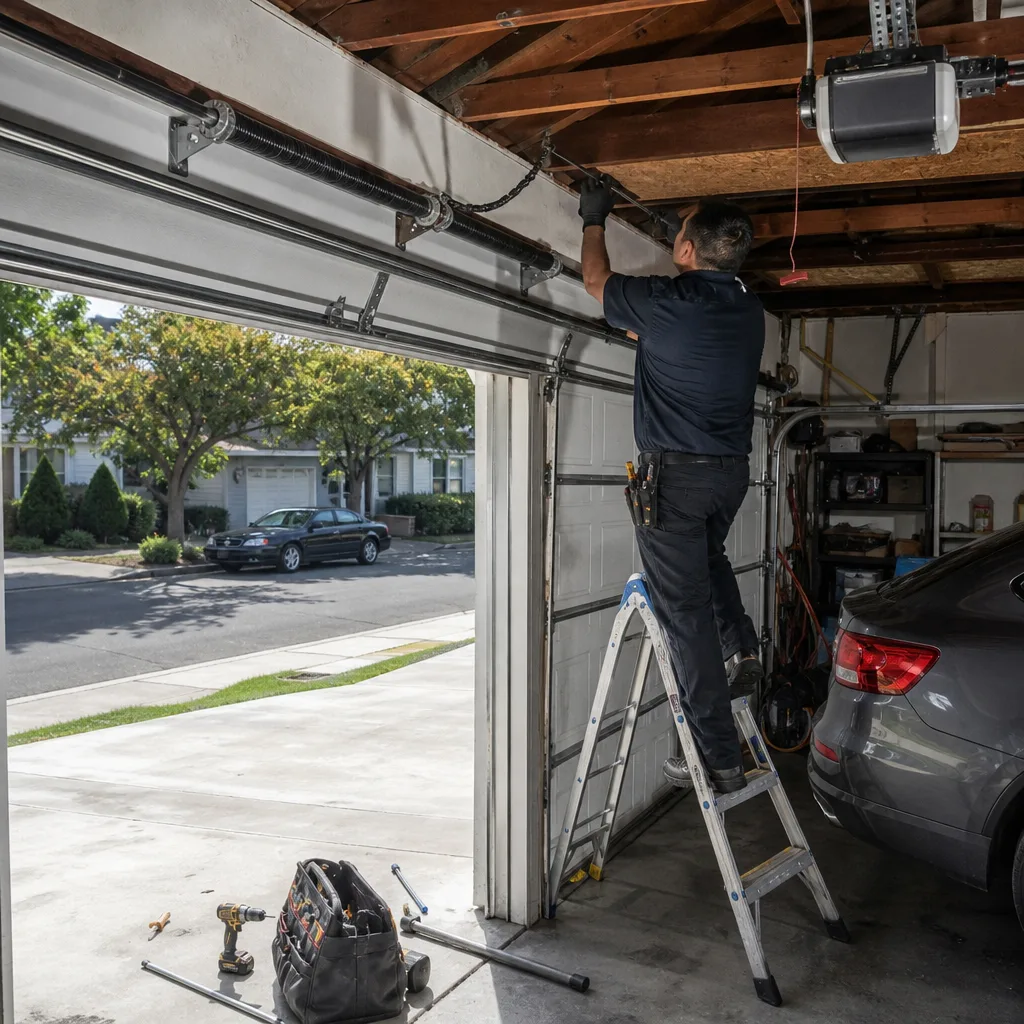
- Symptom-to-Component Mapping: What Each Warning Sign Actually Means
- Noise Decoded: Grinding vs. Squealing vs. Banging
- Visual Warning Signs Homeowners Routinely Misread
- Same-Week Repair vs. Stop-Use-Now: Understanding Urgency Levels
- Three Diagnostic Tests You Can Safely Perform
- How to Photograph and Describe a Warning Sign Before Calling
- Fremont-Specific Factors That Accelerate Wear
- Common Mistakes to Avoid
- When to Call a Professional
- Frequently Asked Questions
Symptom-to-Component Mapping: What Each Warning Sign Actually Means
A garage door that reverses before fully closing isn’t “broken.” It’s telling you one of three specific things, and each has a different fix and a different price.
Reversal before closing, with no visible obstruction: This typically traces to photo-eye misalignment, a force-setting that drifted out of calibration, or a damaged bottom seal triggering the resistance sensor. In Fremont’s older Centerville homes, we regularly see photo-eye brackets loosen from decades of vibration against the original wood framing. The diagnostic test is simple: hold down the wall button. If the door closes fully while you’re pressing it, the photo eyes are the prime suspect. If it still reverses, the force setting or the logic board in the opener is more likely. Photo-eye realignment runs $85-$140 in Fremont. A logic board replacement on a LiftMaster or Chamberlain unit typically ranges $280-$420, including programming.
Door opens but won’t close with the remote, yet the wall button works: This almost always points to a safety sensor issue or, less commonly, a remote with a failing battery or corrupted code. The wall button bypasses the photo-eye circuit. Check the LED indicators on the sensors first: steady glow means aligned, blinking means misaligned or obstructed, no light means no power or failed sensor.
Door starts down then stops, with the motor running but no movement: This implicates the trolley carriage or the limit switch. The trolley carriage is the shuttle that connects the opener arm to the chain or belt; when its internal gears strip, the motor runs but nothing moves. The limit switch tells the opener how far to travel, and when it fails, the door may stop short or try to travel too far. Trolley carriage replacement runs $120-$180. Limit switch adjustment or replacement is typically $95-$150.
Door opens unevenly, with one side higher than the other: This is a cable or spring issue, and it’s one of the few symptoms that can escalate to a safety hazard. Torsion springs, the coiled springs above the door, are paired. When one breaks, the remaining spring lifts unevenly. Cables can also slip off the drum or fray unevenly. In our experience across Fremont, from the hillside homes in Mission San Jose to the flat lots in Irvington, spring failures spike in October and November after the first temperature drops. Our Seasonal Garage Door Care for Fremont: Year-Round Homeowner’s Guide explains how to prepare for these predictable stress points. A single broken torsion spring replacement in Fremont typically costs $180-$340. If both springs are original and one has failed, we quote both, since matched-age springs have similar cycle life remaining.
Door is heavy to lift manually or won’t stay open at the halfway point: This indicates spring failure or significant spring fatigue. The springs counterbalance the door’s weight, typically 150-250 pounds for a standard steel door. Test by disconnecting the opener (pull the red release cord) and lifting manually. A properly balanced door stays at any position between fully open and closed. If it falls or feels heavy, the springs need attention. This is not a DIY repair. Torsion springs store lethal energy, and winding or unwinding them without proper tools and training causes serious injury annually.
Remote works intermittently, especially in cold mornings: In Fremont’s microclimates, this often traces to a logic board with failing capacitors or a remote with weak signal strength. The Niles Canyon area, with its older electrical infrastructure, sees more logic board issues from voltage fluctuation. Before assuming the opener needs replacement, test the remote battery and reprogram the remote. If the wall button works reliably while the remote fails, the logic board or the receiver antenna is the likely culprit.
Noise Decoded: Grinding vs. Squealing vs. Banging
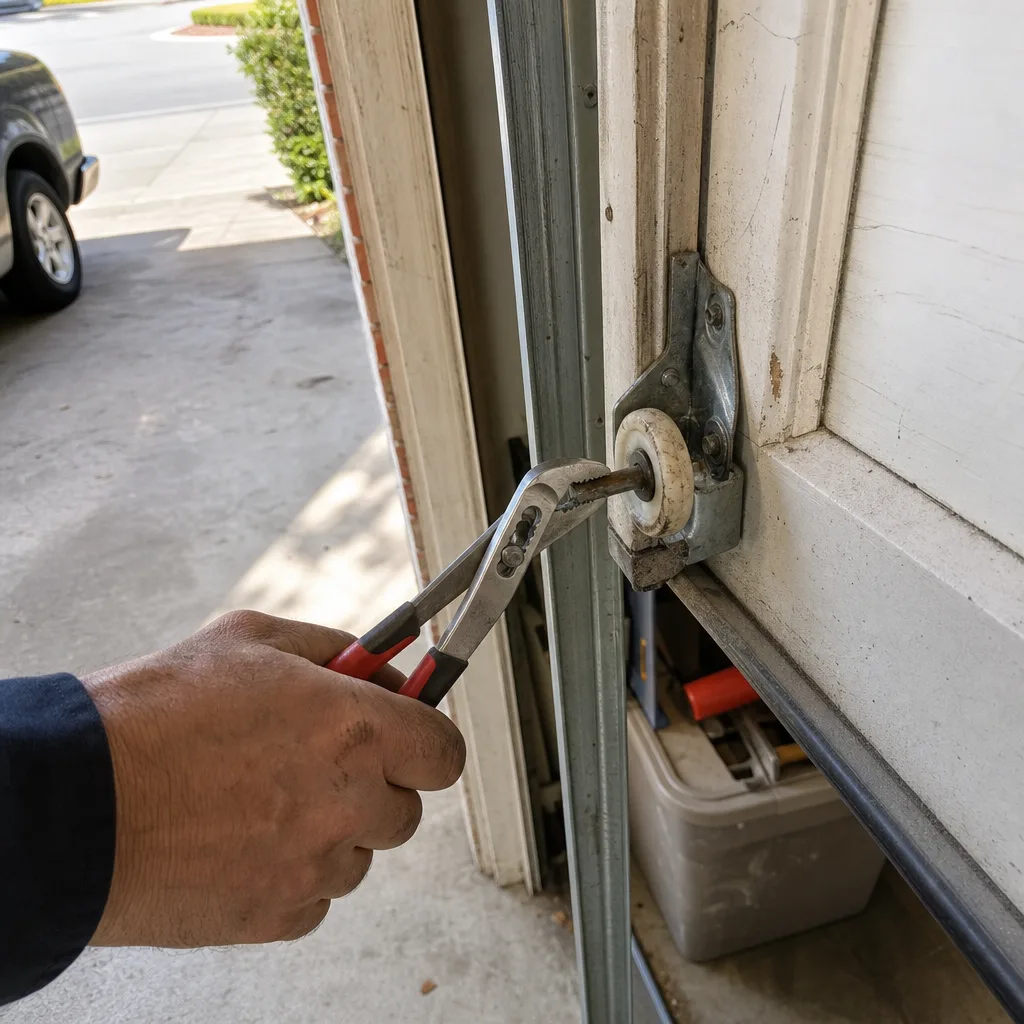
Not all garage door noise means the same thing, and not all of it demands the same urgency. Learning to distinguish the three primary noise types saves you from unnecessary emergency fees and, conversely, from ignoring a sound that precedes a dangerous failure.
Grinding: A low, metallic grinding during opening or closing typically indicates worn rollers or a failing opener gear. Steel rollers without ball bearings grind against the track when their shafts wear. Nylon rollers, common in doors installed after 2010, grind when the nylon shell cracks and the internal bearing seizes. Opener gear grinding, heard from the motor unit itself, means the main drive gear (usually plastic or fiber-reinforced composite) is stripping. In Fremont, we see accelerated roller wear in homes near the Bay, where salt air penetrates garages that aren’t fully sealed. Grinding from the opener gear typically precedes complete failure by 20-40 cycles. Roller replacement runs $8-$15 per roller in Fremont; opener gear replacement is $180-$280 and often signals that the entire opener is nearing end of life.
Squealing: A high-pitched squeal, especially during the first movement of the day, almost always means dry or corroded hinges, rollers, or bearings. This is the most benign noise type, but it’s also the most commonly ignored until it becomes grinding. The fix is lubrication of the hinge pins, roller bearings, and spring coils with a silicone-based or lithium-based garage door lubricant. Not WD-40, which is a solvent, not a lubricant, and attracts dust. In Fremont’s dry summers, squealing develops faster than in humid climates because lubricant evaporates. Annual lubrication prevents this. If squealing persists after lubrication, check for bent hinge pins or rollers with flattened bearings.
Banging or popping: This is the most urgent noise category. A loud bang when the door opens or closes typically means a broken spring or a cable that has slipped from its drum. The “pop” of a torsion spring breaking is unmistakable, often audible from inside the house. A single loud bang followed by a door that won’t open or feels extremely heavy means a spring has failed. A rhythmic banging during travel suggests a door section hinge has failed or a roller has jumped the track. Both are stop-use situations. A door with a failed hinge or derailed roller can collapse if operated. In the Ardenwood area, where many homes have three-car garages with heavy 16-foot doors, we’ve seen banging precede complete door collapse within two cycles.
The diagnostic sequence for noise:
- Isolate the noise source: opener motor, spring area, track/roller interface, or door panel hinges.
- Note when it occurs: start of travel, mid-travel, end of travel, or random.
- Note temperature and time: cold-morning-only noise suggests lubrication or material contraction; noise at all times suggests mechanical wear.
- Photograph the suspected component area for reference when you call.
Visual Warning Signs Homeowners Routinely Misread
Many garage door failures announce themselves visually long before they produce noise or functional symptoms. The problem is that homeowners often read these signs as cosmetic or normal aging.
Cable fraying: The lift cables, typically 1/8-inch aircraft-grade steel, run vertically along the door sides and wrap around drums at the top. Fraying appears as broken wire strands protruding from the cable bundle, like a frayed rope. This is not cosmetic. A frayed cable has reduced load capacity, and when it fails, the full door weight transfers instantly to the remaining cable and the spring system. In Fremont’s marine-influenced climate, cable corrosion accelerates, especially in garages with poor ventilation. We replace frayed cables same-week, and we photograph the fray pattern to show the customer exactly why. Cable replacement in Fremont runs $140-$220 per pair, including tension adjustment.
Rust patterns on torsion springs: Surface rust on springs is common and not immediately dangerous. But rust that has pitted the wire, or rust combined with a visible gap between coils when the door is closed (indicating spring stretch), means the spring has lost tension and is working harder to lift the same weight. In the older Mission San Jose neighborhood, where some garages date to the 1960s and have minimal insulation, we’ve seen springs with advanced pitting that the homeowner assumed were “just old.” Those springs failed within weeks. The test: measure the gap between coils at rest. On a standard 2-inch diameter spring, coil gaps should be minimal. Widening gaps mean the spring has stretched and lost its calibrated torque.
Roller wear indicators: Nylon rollers show wear as flattened spots, cracking, or a wobble visible during door travel. Steel rollers show wear as a polished or grooved shaft where it contacts the track bracket. A roller that wobbles in the track is a roller that’s about to jump the track or seize. The wobble itself causes track wear, compounding the problem. We document roller condition in our photo record on every visit, and we flag rollers that are functional but showing early wear so the homeowner can plan replacement.
Panel sag or bow: A steel door panel that sags between the hinge points, or bows outward when the door is closed, indicates internal reinforcement failure or, in insulated doors, delamination of the foam core from the steel skins. This is structural. A sagging panel stresses the hinges and track alignment, and it creates binding that accelerates opener wear. In Fremont’s newer developments like Warm Springs, where some builders used lighter-gauge doors to meet price points, panel sag appears within 8-12 years rather than the 20+ expected from premium doors.
Track misalignment visible to the eye: The vertical tracks should be perfectly plumb, and the horizontal tracks should have a consistent backward slope toward the opener. A track that has shifted, visible as a gap between the track and the jamb bracket or as a door that rubs one side, means the fasteners have loosened or the jamb itself has settled. This is not “settling” to ignore. A rubbing door is a binding door, and binding creates opener strain and safety sensor misalignment.
Same-Week Repair vs. Stop-Use-Now: Understanding Urgency Levels
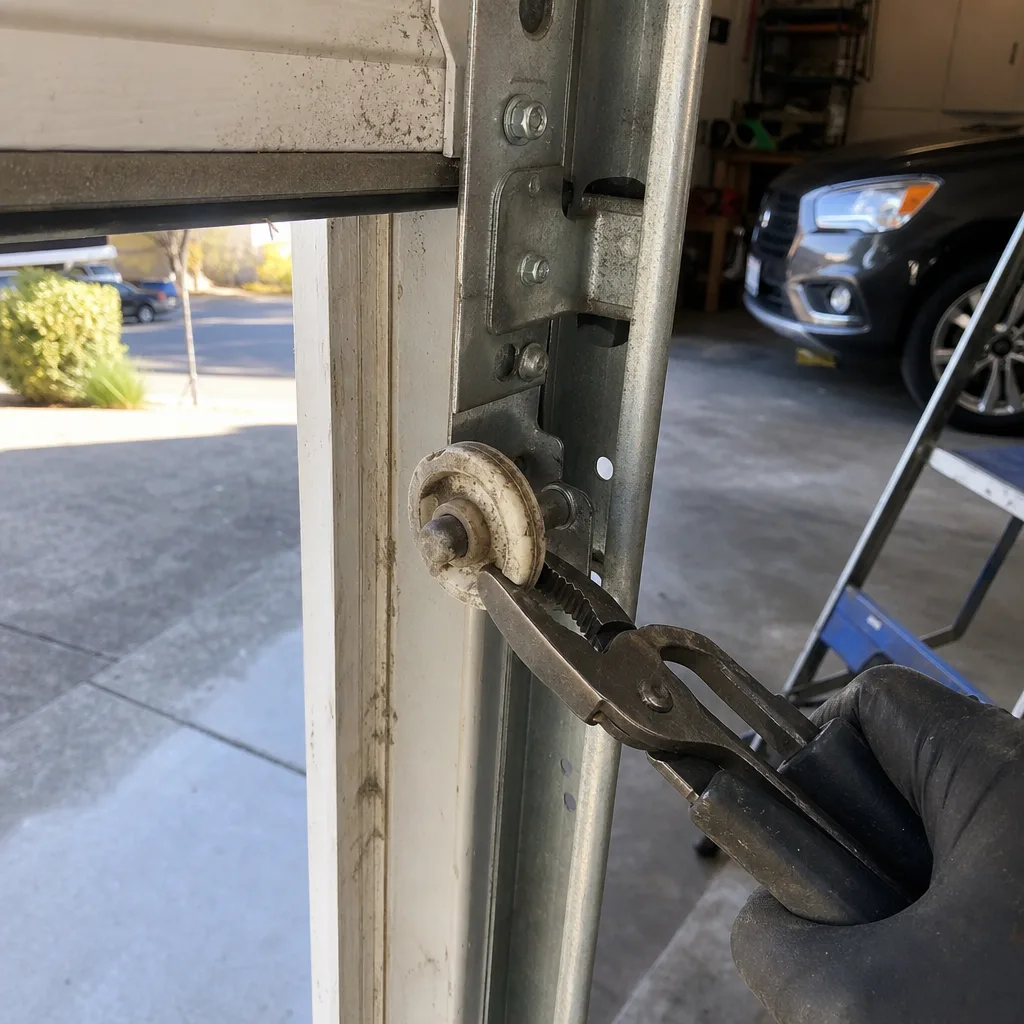
Not every warning sign demands emergency service, and treating every symptom as urgent wastes money and trains you to ignore future warnings. Here’s how we classify urgency, with the mechanical reasoning behind each level.
Same-week repair (schedule within 3-5 days):
- Squealing that persists after lubrication: indicates wear, not imminent failure, but will progress to grinding or seizing.
- Remote intermittent function with reliable wall button operation: convenience issue, not safety issue.
- Minor photo-eye misalignment that clears with bracket adjustment: safety system is functional but finicky.
- Single roller with visible wear but no wobble or noise: plan replacement before next annual service.
- Rust on springs without pitting or coil gap: monitor, photograph, plan replacement within the season.
The mechanical reasoning: these symptoms indicate degradation that will worsen, but the door remains safe to operate with normal caution. The safety systems (photo eyes, auto-reverse) are functional.
Stop-use-now (do not operate, call for same-day assessment):
- Broken spring (loud bang, door heavy or won’t open): the door is unbalanced and can fall or damage the opener if forced.
- Frayed cable with visible broken strands: reduced safety margin, sudden failure possible on next cycle.
- Door that reverses unpredictably or fails to auto-reverse when tested: safety system failure is a code violation and injury risk.
- Roller jumped from track or hinge separated from door panel: structural integrity compromised, door can collapse.
- Opener motor runs but door doesn’t move, with grinding from motor unit: stripped gears can allow uncontrolled door movement.
The mechanical reasoning: these symptoms involve either loss of counterbalance (spring/cable), loss of structural integrity (roller/track/door panel), or loss of safety system function. Operating the door risks property damage, injury, or code liability.
In Fremont, the municipal code references ANSI/DASMA standards for garage door safety system function. A door that fails to auto-reverse is not just a repair issue; it’s a code compliance issue if you’re selling or renting the property.
Three Diagnostic Tests You Can Safely Perform
These tests require no tools and carry no risk of injury. They generate the precise information a technician needs to arrive prepared.
Test 1: The Balance Test (tests springs)
- Close the door fully.
- Pull the red emergency release cord to disconnect the opener trolley.
- Lift the door manually to the halfway position and release it.
- A properly balanced door stays in place. A door that falls has weak or broken springs. A door that rises has excessive spring tension.
Safety note: if the door is extremely heavy or you cannot lift it smoothly, the springs have likely failed. Do not force it. Re-engage the opener by pulling the release cord toward the opener unit, or call for service.
Test 2: The Auto-Reverse Test (tests safety systems)
- Place a 2×4 board flat on the floor in the door’s path.
- Close the door using the remote or wall button.
- The door should reverse within 2 seconds of contacting the board.
- If it does not reverse, or reverses before contacting the board, the force setting or photo eyes need adjustment.
Perform this test monthly. In Fremont, where dust from nearby construction and agricultural activity is common, photo-eye lenses need cleaning every 60-90 days for reliable function.
Test 3: The Photo-Eye Alignment Test (tests safety sensors)
- Locate the two photo-eye units, one on each side of the door track near the floor.
- Check that both LED indicators show steady light (color varies by manufacturer: green, red, or amber).
- Clean lenses with a soft cloth.
- If either LED blinks, loosen the bracket wing nut, adjust until steady, and retighten.
- If LEDs are dark, check wire connections at the opener unit.
If alignment and cleaning don’t restore steady LEDs, the sensor or wiring needs replacement. This is a same-week repair, not emergency, unless the door cannot close at all.
How to Photograph and Describe a Warning Sign Before Calling
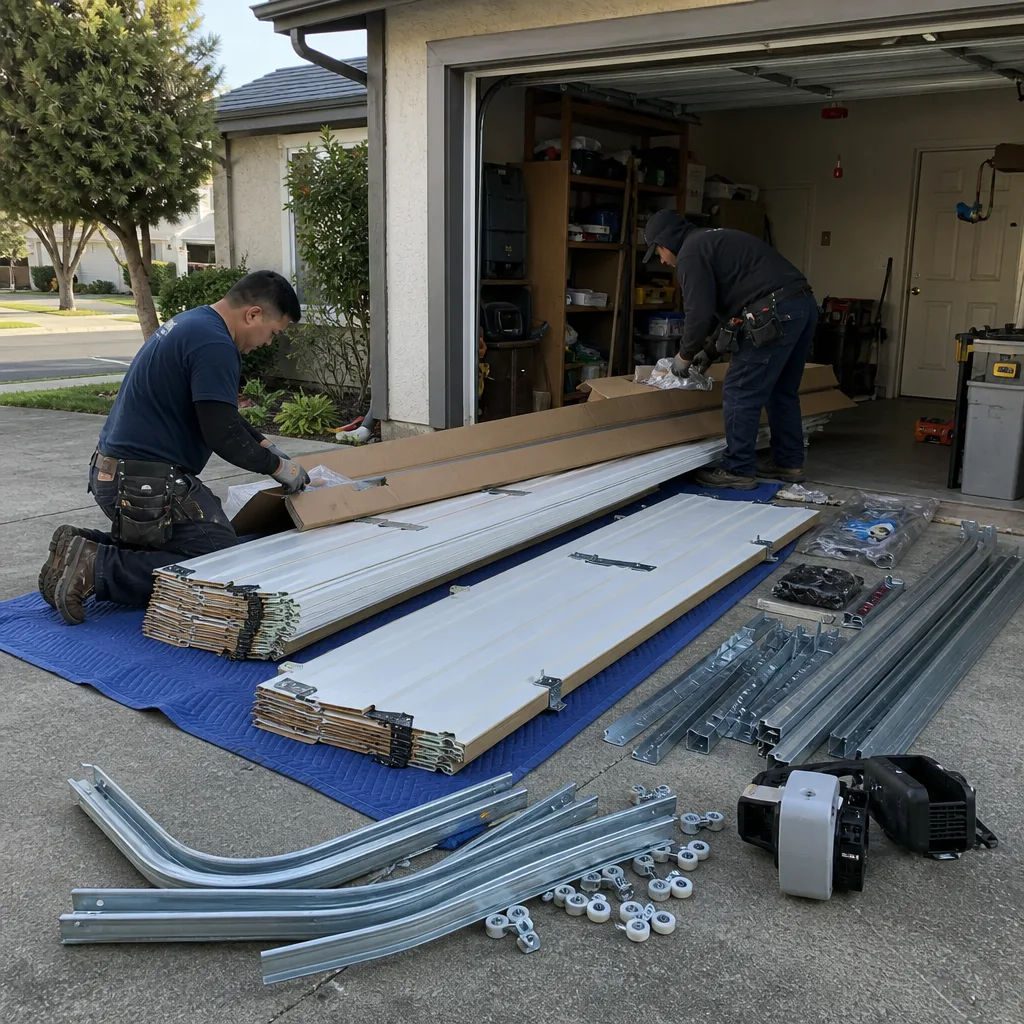
The goal is to make your first conversation with any contractor diagnostic, not logistical. “My garage door is making a noise” requires a callback and a site visit before anyone can quote. “My 16-foot steel door in Fremont is making a grinding noise from the left track during the first three feet of opening, and I’ve photographed the third roller which shows a cracked nylon shell” lets a technician arrive with the right parts and a preliminary quote.
Photography protocol:
- Wide shot: the full door from outside, showing the complete system including opener rail.
- Component close-up: the specific area where the symptom originates, with enough context to identify which roller, hinge, or spring.
- Context shot: the symptom in action, if safe to capture (video of the noise, photo of the reversal point).
- Opener label: the manufacturer sticker (LiftMaster, Chamberlain, Genie, etc.) with model number, usually on the side or back of the motor unit.
Description template:
- Door type and size: “16×7 insulated steel door, installed 2018”
- Opener brand and approximate age: “LiftMaster 8365, original with house”
- Symptom: precise description of noise, movement, or visual sign
- Timing: when it started, whether it’s constant or intermittent, whether temperature affects it
- Recent changes: “new remote last month,” “neighbor backed into the door last year,” “power outage two weeks ago”
This is the documentation standard we apply on every Garage Door Repair in Fremont visit. The customer receives the same photo record we generate, tracing back to Clause 4 of The Haven Standard: the technician photographs the failed component before quoting any replacement. When you arrive with your own documentation, the diagnostic conversation starts at a higher level.
Fremont-Specific Factors That Accelerate Wear
Garage doors in Fremont face a specific set of environmental and regulatory conditions that affect component life and failure patterns.
Marine air and salt exposure: Fremont’s proximity to San Francisco Bay means salt-laden air penetrates garages, especially in the lower-lying areas near the water and in the Niles district where afternoon breezes channel through the canyon. Salt accelerates corrosion on steel springs, cables, and bottom fixtures. We see cable corrosion rates in Fremton’s bay-adjacent neighborhoods that match coastal communities, despite the inland location. Stainless steel cables and galvanized springs add $40-$80 to replacement cost but double service life in these microclimates.
Temperature swings: The daily temperature range in Fremont, especially in the hills above Mission Boulevard, can exceed 30°F between morning low and afternoon high. Steel springs expand and contract with temperature, and this cycling accelerates metal fatigue. Spring failures cluster in October-November and March-April, when temperature swings are largest.
Soil and foundation movement: Fremont sits on a mix of bay mud fill, alluvial deposits, and hillside bedrock. The fill areas, including much of central Fremont and the Warm Springs development, experience ongoing settlement. Garage door frames shift with foundation movement, causing track misalignment that appears as binding or uneven wear. We track this in our documentation: a door that needed track adjustment 18 months after installation often indicates foundation movement rather than installation error.
Local permit requirements: Fremont requires permits for new garage door installations and for structural modifications, but not for like-for-like replacement of springs, openers, or cables. If you’re converting a manual door to automatic, or changing door size, plan for permit and inspection. Our Garage Door Installation in Fremont page details the permit process for major projects.
Neighborhood age patterns: Centerville and Niles have high concentrations of original doors from the 1960s-1980s, with single-layer steel or wood construction that lacks modern safety features. Irvington and the newer Warm Springs areas have doors from the 2000s-2010s, often with builder-grade openers that reach end of life around year 12-15. Knowing your neighborhood’s typical door vintage helps predict what components are likely to need attention.
Common Mistakes to Avoid
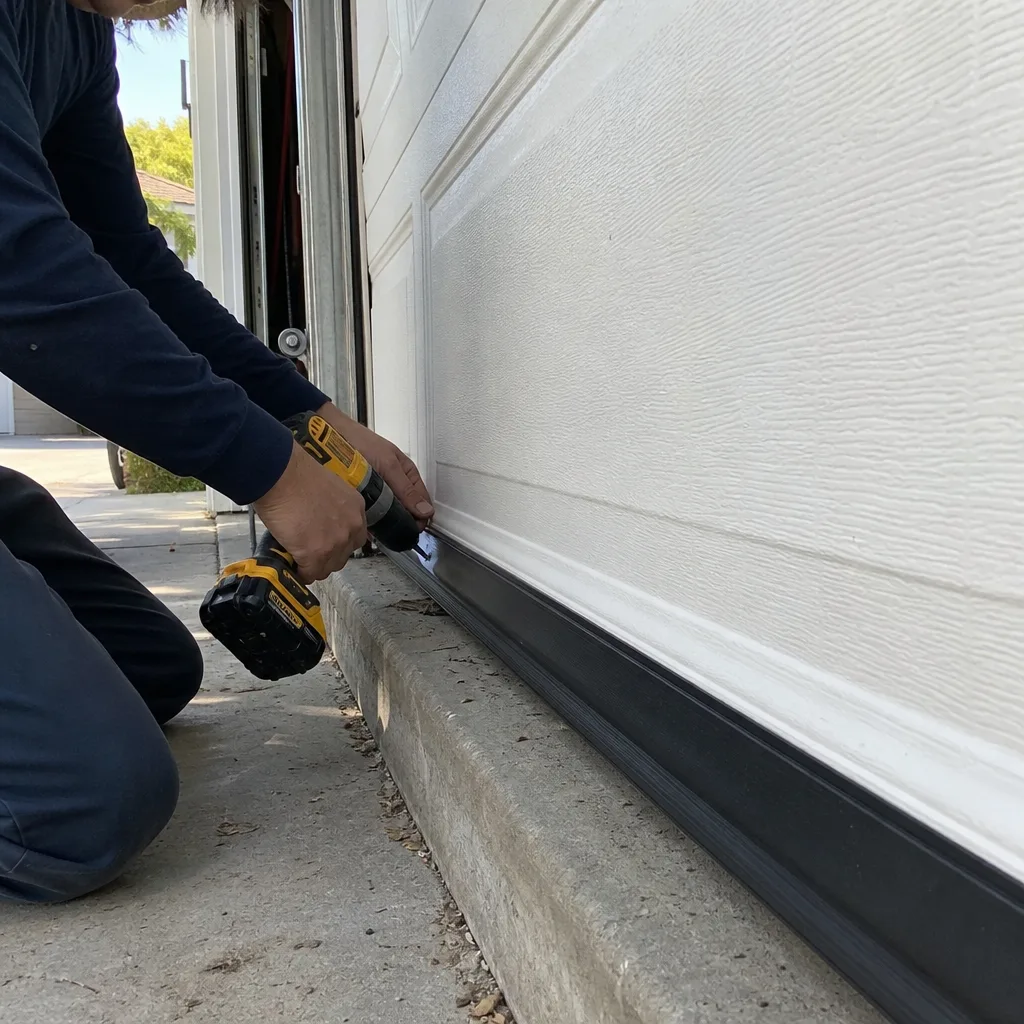
- Ignoring squealing until it becomes grinding. Squealing is cheap to fix with lubrication; grinding often means roller or gear replacement. The difference is $15 in DIY lubricant versus $180-$280 in professional repair.
- Testing a broken spring by forcing the opener to lift the door. This burns out the opener gear or strips the trolley carriage, turning a $220 spring job into a $600 opener replacement. If the door feels heavy, stop.
- Assuming all garage door contractors quote the same way. In Fremont’s market, “call for a quote” often means a technician arrives, diagnoses, and then pressures for an immediate decision. Our Clause 1 requires a flat, written price and written scope before any work starts. Bring any competing written estimate for our Free Second Opinion.
- Replacing only one spring on a two-spring system. Matched springs have the same cycle life. When one fails, the other is near failure. Replacing one guarantees a second service call within months.
- Using WD-40 on hinges or rollers. WD-40 is a water-displacing solvent, not a lubricant. It cleans off existing lubricant and attracts dust, accelerating wear. Use silicone-based or lithium-based garage door lubricant.
- Ignoring photo-eye blinking after cleaning. A blinking LED after lens cleaning and alignment attempts means sensor failure, not user error. Operating without functional photo eyes violates safety standards and local code.
- Assuming a noisy Genie or Raynor opener needs replacement. Many opener noises trace to worn drive gears or loose chain/belt tension, repairable for $180-$280 versus $450-$750 for full opener replacement. Diagnose before replacing.
When to Call a Professional
Call when you’ve identified a symptom that matches a stop-use-now scenario: broken spring, frayed cable, derailed roller, failed safety system, or structural door damage. Call when a diagnostic test fails and you cannot identify the cause. Call when you need documentation for a home sale, insurance claim, or warranty dispute.
Servo Garage Doors Fremont offers free estimates in Fremont. We answer calls with a live person 24/7, including holidays, and emergency calls receive a named technician and an on-the-way text, not a callback window. Every visit includes a documented photo record of findings and completed work, delivered to you. Call (669) 333-7846.
Frequently Asked Questions
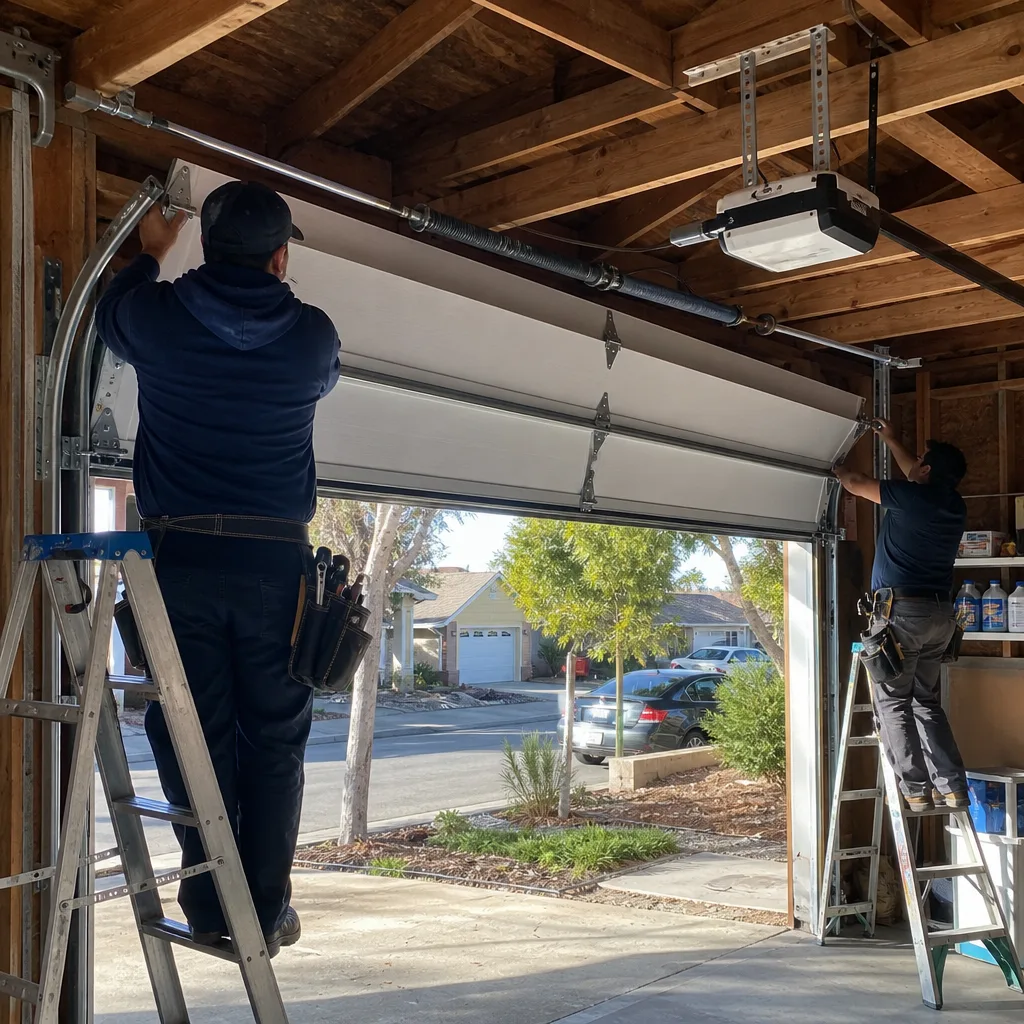
A standard torsion spring replacement in Fremont typically costs $180-$340 for a single spring, or $280-$480 for a matched pair on a two-spring system. The price includes the spring, winding bars, safety cables if required, and labor. We quote a flat, written price before any work starts, per Clause 1 of The Haven Standard. Call (669) 333-7846 for an exact quote on your door - estimates are free.
No. Torsion springs store enough torque to cause serious injury or death if mishandled. The winding and unwinding process requires specialized tools and training. Every year, DIY spring repairs result in emergency room visits. This is not a cost-saving opportunity; it’s a safety boundary. Our technicians are trained and equipped for this work, and we document the process with photographs you receive.
Three common causes: misaligned photo eyes, a force setting that drifted out of calibration, or a damaged bottom seal triggering the resistance sensor. Test by holding the wall button: if the door closes fully, the photo eyes are misaligned. If it still reverses, the force setting or opener logic board needs attention. Photo-eye realignment runs $85-$140; logic board replacement is $280-$420.
A quality opener (LiftMaster, Chamberlain, Genie, or Raynor) typically lasts 12-15 years with normal use in Fremont’s climate. Salt air exposure and temperature cycling can reduce this by 2-3 years in bay-adjacent neighborhoods. We see more logic board failures from voltage fluctuation than from mechanical wear. Our photo record on every visit tracks opener condition so you can plan replacement before emergency failure.
No. Our written price is the price. Clause 1 of The Haven Standard requires a flat, written price and written scope before any work starts. If we discover additional issues during the repair, we document them with photographs, explain them, and quote them separately. You approve each scope before work proceeds. No surprises, no pressure.
Yes. Our trucks stock torsion springs in common wire sizes and diameters, cables, rollers, hinges, photo-eye sets, and logic boards for LiftMaster, Chamberlain, Genie, and Raynor openers. For less common door sizes or older opener models, we may need to source parts for next-day completion. We’ll tell you during the diagnostic call if your door requires a special order.
The Bottom Line
Your garage door speaks before it fails. The grinding, the reversal, the frayed cable, the rust pattern - each is a specific signal about a specific component, with a specific repair cost and urgency level. Learning to read these signs lets you describe your situation with precision, avoid emergency premiums for non-emergencies, and recognize the rare symptom that truly demands stopping use immediately. In Fremont’s particular climate of salt air, temperature swing, and varied foundation conditions, local experience matters for accurate diagnosis and durable repair. Document what you see, test what you can safely test, and call when the symptom maps to a safety-critical component.
Written by Marcus Deller, Owner at Servo Garage Doors Fremont, serving Fremont since 2015.