
Full 25-point door and opener safety check with every visit - springs, cables, rollers, tracks, and your LiftMaster or Chamberlain opener included
You get a price before we start. It does not change when the truck arrives.
LiftMaster Roller Replacement: The Fremont Owner’s Guide
LiftMaster roller replacement in Fremont typically runs $110-$220 installed, and we stock the common sizes on every truck. Most jobs are wrapped in under an hour once we’re on site. You’ll know the rollers are failing when the door starts grinding, shaking, or hanging at specific points in its travel - usually first noticed on the morning commute out of the Warm Springs district or coming home to a Niles Canyon-adjacent property.
The rollers are the small wheels that ride inside the vertical and horizontal track sections, guiding your door up and down. On LiftMaster openers, the motor and trolley do the pulling, but if the rollers are seized or worn, the opener strains, the door binds, and the logic board can throw error codes that point you everywhere except the actual problem.
Which LiftMaster Models This Applies To
LiftMaster doesn’t manufacture the rollers themselves - they’re a door hardware component, not an opener part - but the pairing matters. The opener’s rail length, horsepower, and force settings must match the door weight that the rollers are carrying. We see this mismatch most often on 8500W wall-mount units paired with heavier solid-core wood doors, or on legacy 1/2-horsepower 8365W chain drives where the original builder-grade rollers have flat-spotted after eight to twelve years of Fremont’s dry, warm-season expansion cycles.
To identify what you need: check the roller stem diameter (most residential are 2-inch rollers on 7/16-inch or 1/2-inch stems), count how many rollers your door uses (typically ten on a standard seven-foot, two-car door), and note whether you currently have steel, nylon, or sealed-bearing nylon rollers. The OEM-compatible rollers we install are sealed-bearing nylon with a 13-ball race - quieter than steel, longer-lived in dusty East Bay conditions, and rated for the cycle count that matches most LiftMaster warranty periods. We also stock the economy-grade steel rollers for rental properties and budget-conscious replacements, and we’ll quote both if you ask.
Marcus Deller and our crew have worked on LiftMaster systems across Fremont since 2015, from the townhome clusters near Central Park to the hillside installs off Mission Boulevard. We carry Chamberlain and Genie-compatible rollers as well, since the hardware specs cross over, but we match the roller grade to the opener’s duty cycle, not just the brand sticker.
Signs Your LiftMaster Roller Replacement Is Failing
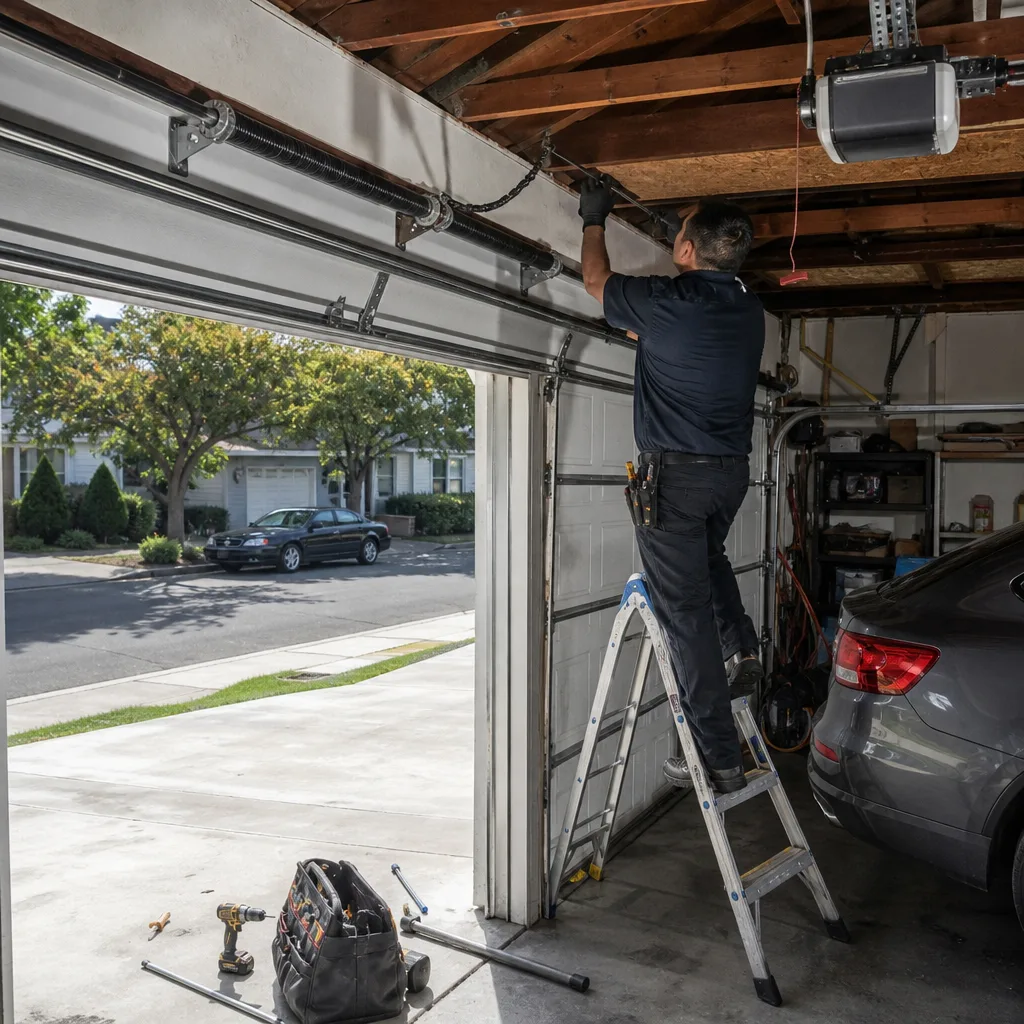
- Grinding or squealing during open/close cycles. The roller bearings have lost lubrication or the race has cracked. Steel rollers will shriek; nylon rollers will grind more quietly but with a deeper rumble. Either way, the opener motor is pulling harder than spec, which shows up eventually as premature trolley wear or a toasted logic board.
- The door hangs or hesitates at the same height every time. One or more rollers have flat-spotted or the stem has bent slightly. The track isn’t the problem - the wheel isn’t round anymore, so it catches at the same rotation point. We photograph this before quoting; the flat spot is visible once you know to look for it.
- Visible wobble or lateral play in the door as it moves. The roller stem has worn the hinge bracket hole oval, or the roller itself has developed axial play in its bearing. This is the stage where the door can jump track if the opener force setting is aggressive, which is common on older LiftMaster units where the force hasn’t been recalibrated.
- Rust-colored dust or grease streaks on the track. Steel rollers shedding oxidation and old grease. In Fremont’s climate, this accelerates if the garage faces south or west and gets afternoon heat - the thermal cycling breaks down the factory grease faster than in shaded north-facing setups.
- The opener runs but the door barely moves, or reverses immediately. The safety sensors are the first thing most owners check, but seized rollers can trigger the force reversal on newer LiftMaster models with MyQ-enabled force monitoring. The opener thinks it hit an obstruction because the motor load spiked.
Replacement Cost & What’s Included
| Service | Price Range in Fremont |
|---|---|
| Standard roller replacement (10 rollers, nylon sealed-bearing) | $110-$220 |
| Upgrade to high-cycle sealed bearing (20,000+ cycle rating) | Add $40-$80 |
| Steel roller replacement (budget option) | $90-$160 |
| Hinge bracket replacement (if oval-worn) | $15-$35 each |
| Track inspection and minor alignment | Included |
The $110-$220 range covers parts, labor, and the documented photo record we deliver before leaving. What moves you within that range: roller grade (nylon vs. steel vs. high-cycle), whether the hinge brackets need replacement, and how many rollers we’re swapping. We don’t quote until we’ve seen the door run and photographed the wear pattern - Clause 4 of The Haven Standard. The price you sign is the price on the invoice. If we find something unexpected, we stop, show you the photo, and re-quote before touching a tool.
Every roller replacement carries our 365-Day Done Right Promise. If a roller fails or a noise returns, we make it right. The warranty is in writing, not a handshake.
DIY or Call Us?
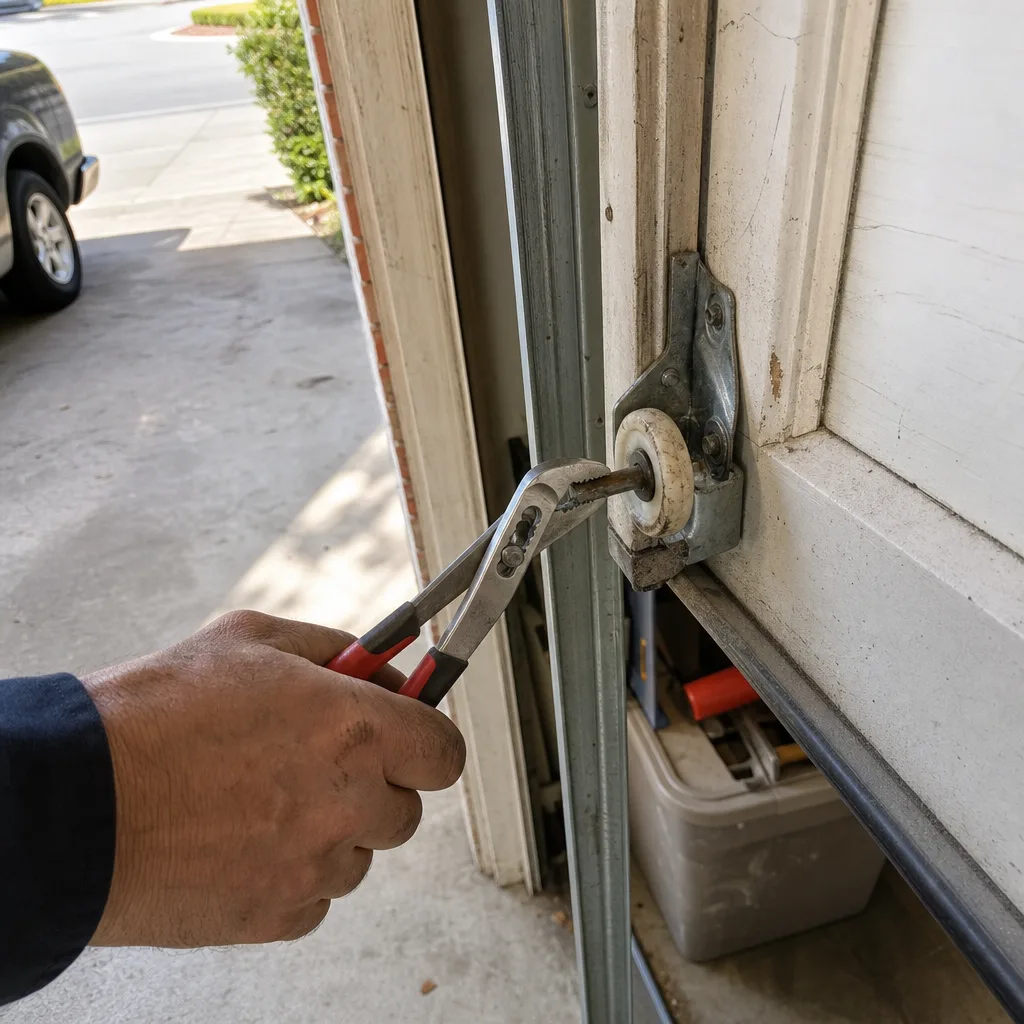
Here’s where we’ll be straight with you. A roller swap isn’t spring work - there’s no stored torque that’ll take a hand off - but the door is heavy, and the hinges are under load when the door is in the open position. An owner with a socket set, a pair of locking pliers, and a helper can safely inspect: pull the opener release cord, lift the door manually to waist height, and wiggle each roller for play or rough rotation. If you find one that’s seized, mark it.
Where DIY goes wrong: trying to swap rollers with the door in the open position (the hinge bracket can snap closed on fingers), using the wrong stem diameter (7/16-inch rollers in 1/2-inch holes will walk and chew the bracket), or missing that the track itself is bent from years of bad roller contact. We’ve also seen homeowners lubricate the track instead of the roller bearings, which attracts grit and accelerates wear. Name the part, quote the range, then do the work - in that order. That’s how we handle it, and it’s why our calls from Fremont’s Mission San Jose and Ardenwood neighborhoods tend to be repeat customers or referrals.
If you want the inspection without the risk, call (669) 333-7846. We’ll photograph what we find, quote flat, and swap what needs swapping.
FAQs
Standard nylon rollers last 8-12 years in Fremont’s dry climate, though south- and west-facing garages see closer to 8 due to thermal cycling. High-cycle sealed-bearing rollers can push 15-20 years. Call (669) 333-7846 and we’ll inspect what you have - estimates are free.
No. Once the bearing race is cracked or the wheel is flat-spotted, the roller is done. Re-lubrication can quiet a dry bearing for a few weeks, but it’s a temporary mask, not a fix. We don’t recommend it. Call (669) 333-7846 for a proper replacement quote.
Most residential jobs take 45-60 minutes from truck arrival to photo record delivery. We bring the common sizes, so there’s no parts run. Call (669) 333-7846 to schedule - same-day availability most days.
Yes. We carry 2-inch and 3-inch nylon sealed-bearing rollers in both 7/16-inch and 1/2-inch stem diameters, plus steel rollers for budget replacements. If your door uses an uncommon size - some older Clopay and Wayne Dalton setups do - we’ll source it and schedule the return visit, no charge for the trip if we quoted it. Call (669) 333-7846 to confirm what you need.
Written by Marcus Deller, Owner, Servo Garage Doors Fremont at Servo Garage Doors Fremont, serving Fremont and nearby areas.